Improving microbial diversity in polar numerical ecosystem models
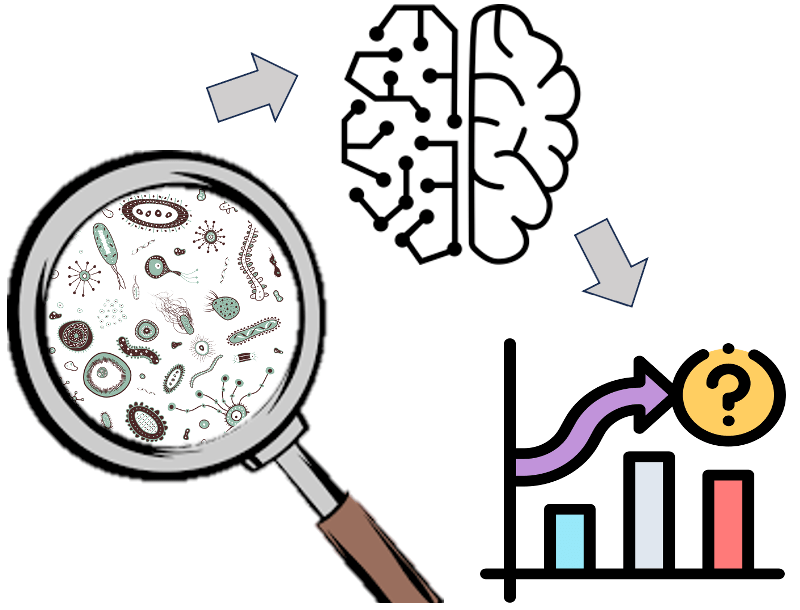
Numerical modeling is a critical method for testing ecological mechanisms and predicting the impacts of environmental change in the upper ocean. However, current approaches are not well resolved for bacterial diversity or activity rates, impacting future projections of marine ecosystem functions like biological carbon drawdown. Using novel machine learning methods, a microbial oriented polar biogeochemistry model, and time-resolved Arctic genomic datasets, this research aims to transform our understanding of cellular environmental responses into a scale relevant for ecosystem modeling.
This newly developed polar hybrid model is being used to conduct research in the central Arctic Ocean using data from the MOSAiC Expedition (2019–2020), western Antarctic Peninsula using data from the Palmer LTER Program, and coastal Svalbard as part of the The International Kongsfjorden Year (2024–2025) in collaboration with the Balmonte Lab at Lehigh University.
This project has supported my postdoctoral work in the Kim Lab at Woods Hole Oceanographic Institution (WHOI), as well as laboratory assistant, Theo Calianos.
Funded by NSF OPP PRF Award #2317681, supported by the Kim Lab (WHOI).
Freshwater impacts on ecological regimes in the Siberian Arctic
The Siberian Arctic ecosystem is experiencing significant changes due to increasing freshwater input from both riverine sources and sea ice melt, resulting in overall changes in water mass and chemical distributions. In this project, I am collaborating with three other Early Career Researchers — Clare Gaffey (Oregon State University), Alessandra D’Angelo (University of Rhode Island), and Laramie Jensen (University of Washington) — to explore how these changing environmental and anthropogenic processes interact and impact ecosystem services (e.g. productivity) within the region. Data for this project were collected as part of the 2025 Nansen and Amundsen Basins Observational System (NABOS) Expedition aboard the US Coast Guard Cutter Healy.
Specifically, this work will assess the freshwater sources and sinks of trace metals (Fe, Mn, Cu, Ni, Cd, Zn, Pb) and microplastics in the coastal Arctic marine ecosystem, their impact on microbial (bacteria, phytoplankton) species composition and metabolism, primary producer physiological health and productivity; and ingestion by zooplankton.
Funded by NSF OPP Award #2532050, supported by the Kim Lab (WHOI).

The MOSAiC Expedition
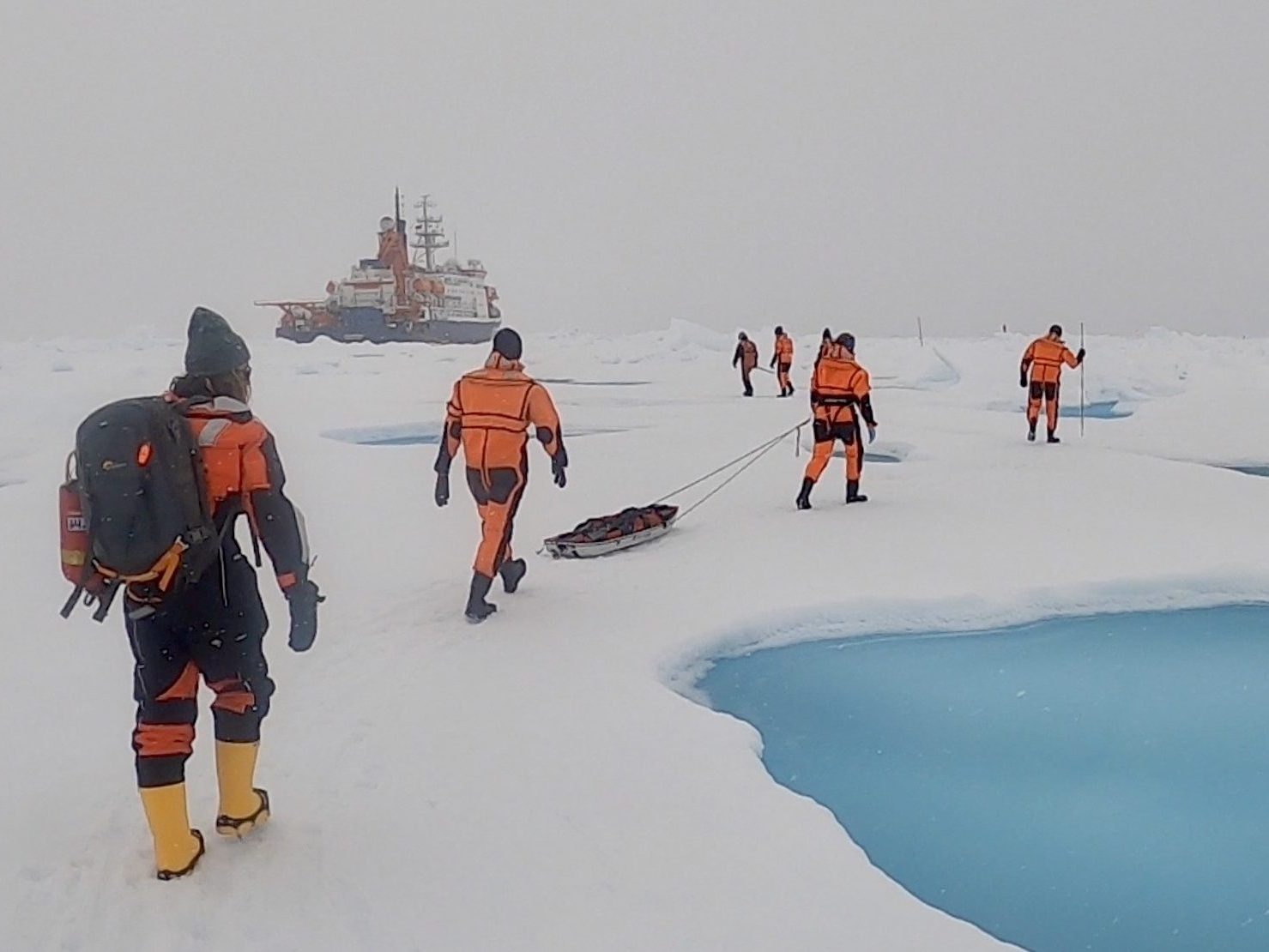
From September 2019 to October 2020, the German icebreaker ship Polarstern was intentionally frozen into the Arctic sea ice for the Multidisciplinary drifting Observatory for the Study of Arctic Climate (MOSAiC) expedition. I was on board for 6 months as part of my my PhD dissertation research in the Bowman Lab at Scripps Institution of Oceanography (SIO). Collecting data on the microbial communities living in sea ice and the upper water column, my thesis work focused on helping quantify specific microbial contributions to oxygen and carbon turnover in the central Arctic Ocean. By looking at how community composition and metabolic activity changed over seasonal and environmental gradients, this work aims to help resolve the relative contributions of process-level biological mechanisms driving net carbon sequestration in the context of a changing Arctic.
In addition to my thesis work, I have ongoing collaborations on several interdisciplinary MOSAiC projects, including the evolution of summer meltwater at the ice-ocean interface, sea ice dynamics, lead dynamics, biogeochemistry of melt ponds, cloud-forming aerosols, microbial oxidation of methane, and more. (See Publications).
Funded by NSF OPP Award # 1821911, supported by the Bowman Lab (UCSD/SIO)
Microbes and carbon flow along the Alaskan coast
In June 2023, I attended the UNOLS/AICC Arctic Chief Scientist Training Cruise onboard the Research Vessel Sikuliaq following a transit from Seward to Nome, Alaska. Collaborating with fellow microbial ecologists Katie Harding (SIO/UCSD) and Sarah Tucker (MBL), we collected measurements of bacterial community composition and respiration rates to answer questions about the diversity and strength of microbial loop processes along an Arctic coastal gradient.
Data analysis for this project is being led by Jack Kent Cook Foundation Undergraduate Research Fellow, Gavin Pirtle (UC Davis).
Funded by the 2023 NSF UNOLS/AICC Arctic Chief Scientist Training Program, supported by the Balmonte Lab (Lehigh University).
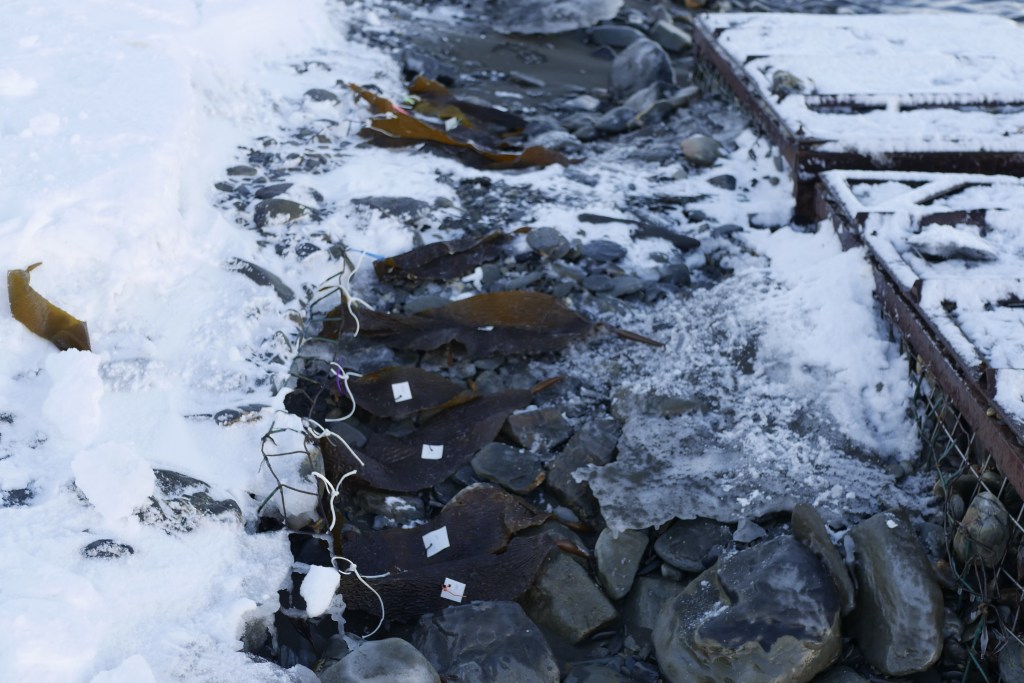
Who’s who in the sub-Antarctic Kelp microbiome
Along coastlines, Kelp macro-algae create extensive underwater forests that perform many ecosystem services such as providing habitat and food for fisheries, protecting shorelines against coastal erosion, and fixing carbon via photosynthesis. The microbes that grow on and are associated with the surface of kelp fronds can both help (e.g., preventing the colonization of larvae and biofouling) and hurt this primary producer, contributing to their decomposition and ultimate burial of the carbon contained within the plant material.
Working with Nadia Frontier of the British Antarctic Survey, this project aims to quantify the naturally occurring and decomposition associated microbial assemblages of the bull kelp Macrocystis pyfiera along climate-sensitive polar coastlines. Results from this work contribute directly to our understanding of community ecology operating across trophic scales and will provide never before reported results on the species composition of microbial communities associated with sub-polar Kelp.
Supported by the British Antarctic Survey.
The Penguano Project
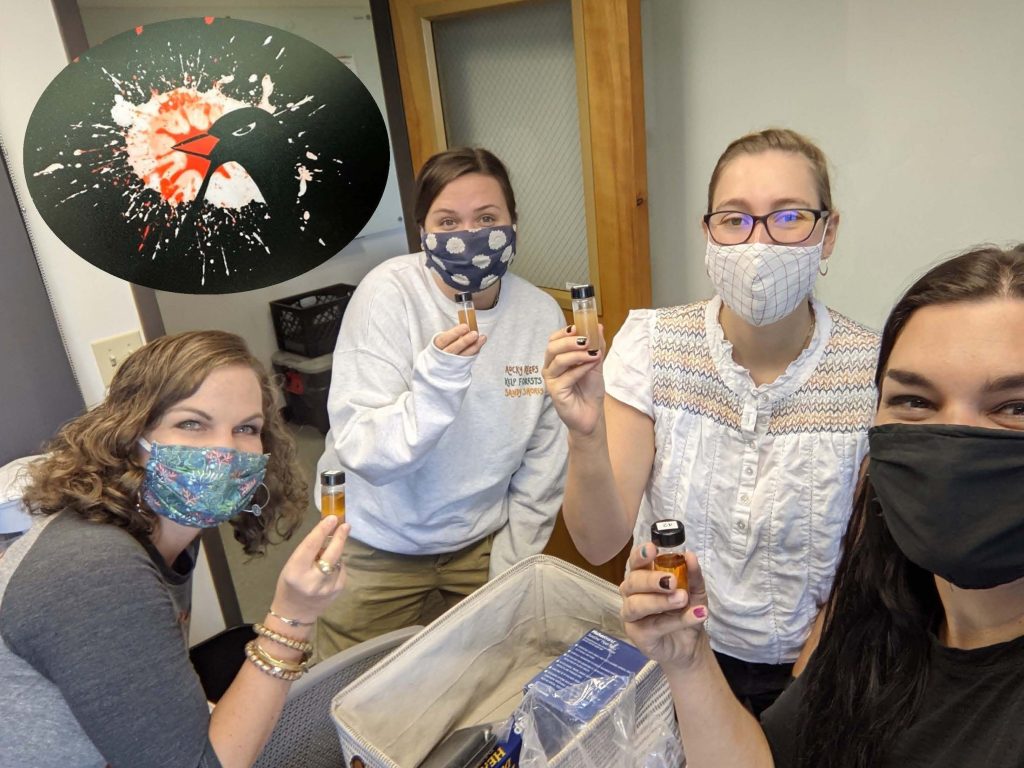
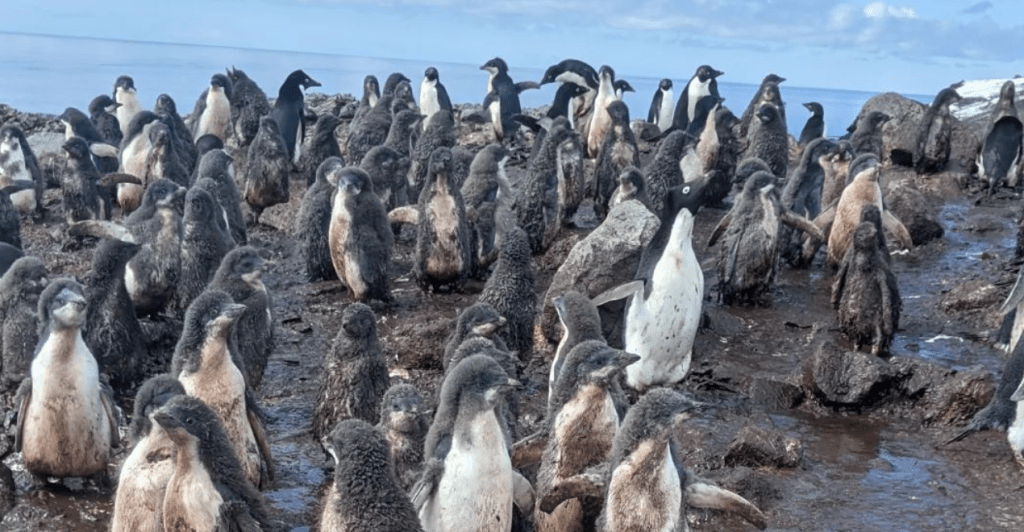
Led by seabird ecologist Tammy Russell, the Penguano project studies plastics in the western Antarctic Peninsula food web by analyzing penguin diet preferences (using eDNA) and the quantity of micro plastics found in their guano.

Funded by NOAA, supported by Birch Aquarium and the Vernet/Bowman Labs (UCSD/SIO)
 Emelia J. Chamberlain